
Call (206) 762-2573
What Is a Dental Bridge?
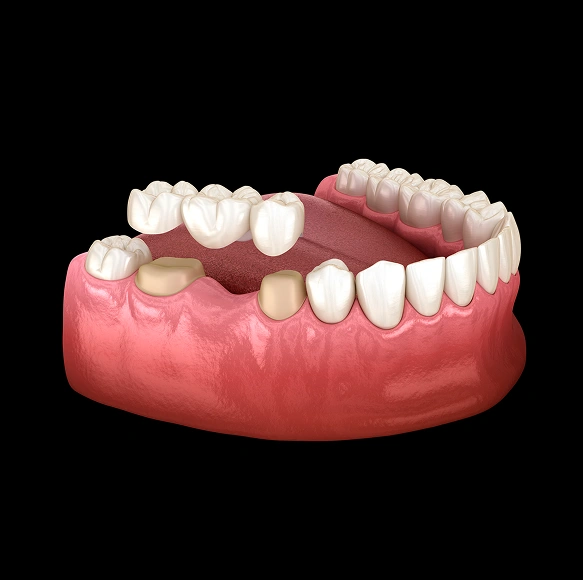
A dental bridge is a fixed restoration used to replace one or more missing teeth. It works by anchoring an artificial tooth, called a pontic, to the natural teeth on either side of the gap. Those supporting teeth, called abutment teeth, are prepared and fitted with crowns that hold the bridge securely in place.
The result is a seamless, natural-looking restoration that fills the space left by a missing tooth, restores your ability to chew and speak comfortably, and prevents the surrounding teeth from shifting out of position over time.
At White Center Smiles in Seattle, we custom-design every bridge to match the shape, size, and color of your natural teeth. Most patients leave with a restoration that blends in so naturally that others cannot tell the difference.

Schedule a Bridge Consultation
Why Replacing a Missing Tooth Matters
It can be tempting to leave a missing tooth alone, especially if it is not visible when you smile. But the effects of a missing tooth go well beyond appearance.
When a tooth is lost, the surrounding teeth begin to drift toward the empty space over time. This can lead to bite misalignment, increased stress on the remaining teeth, and difficulty chewing properly. The jawbone in the area of the missing tooth can also begin to deteriorate without the stimulation that a tooth root provides.
Missing teeth are also linked to changes in facial structure over time. The longer a gap is left untreated, the more complex and costly the solution tends to become.
A dental bridge addresses the problem quickly and effectively. It stops shifting, restores function, and protects the integrity of your surrounding teeth and bite
Finding the Right Bridge for Your Situation
There are several types of dental bridges available depending on your specific needs and the location of the missing tooth.
- Traditional Dental Bridge - The most common type. An artificial tooth is held in place by crowns placed on the natural teeth on either side of the gap. This is a strong, reliable option for most patients with healthy abutment teeth.
- Cantilever Bridge - Used when there is only one natural tooth adjacent to the gap rather than two. The bridge is anchored to just one supporting tooth. This option is less common and typically used in lower-stress areas of the mouth.
- Maryland Bridge - A more conservative option that uses a metal or porcelain framework bonded to the back of the adjacent teeth rather than full crowns. This preserves more of the natural tooth structure but is generally less durable than a traditional bridge.
- Implant-Supported Bridge - Instead of relying on natural teeth for support, this type of bridge is anchored to dental implants placed in the jawbone. It is the most stable and long-lasting option, particularly for patients replacing multiple consecutive teeth.
Our team at White Center Smiles will evaluate your teeth, bone health, and overall oral health to recommend the bridge type that is best suited to your situation.
The Dental Bridge Process at White Center Smiles
01.
Consultation and Evaluation
We examine your teeth and discuss your goals. We assess the health of the surrounding teeth, your bite, and whether a bridge is the most appropriate solution for your situation.

Prev
Next
02.
Preparing the Abutment Teeth
The teeth on either side of the gap are gently shaped to accommodate the crowns that will hold the bridge. Local anesthesia is used to keep you comfortable throughout.
Prev
Next
03.
Impressions
We take a precise impression or digital scan of your teeth. This is sent to a dental lab where your custom bridge is fabricated to match your natural teeth exactly.
Prev
Next
04.
Temporary Bridge
A temporary bridge is placed to protect the prepared teeth and maintain your appearance and function while your permanent bridge is being made.
Prev
Next
05.
Fitting Your Permanent Bridge
When your bridge is ready, you return to our Seattle office for placement. We check the fit, bite, and appearance carefully before permanently cementing it in place.
Prev
Next
06.
Final Adjustments
We make any minor adjustments needed to ensure your bridge feels comfortable and your bite is perfectly aligned before you leave.
Prev
Next
How to Keep Your Bridge in Great Shape
A dental bridge can last 10 to 15 years or longer with proper care. Here is how to protect your investment:
- Brush twice daily, paying close attention to the area around the bridge
- Use floss threaders or interdental brushes to clean underneath the pontic where a regular floss cannot reach
- Avoid chewing very hard foods like ice or hard candy that could crack the bridge material
- Wear a night guard if you grind your teeth to prevent excess pressure on the restoration
- Keep up with regular cleanings and exams at White Center Smiles so we can monitor the condition of your bridge and the health of the supporting teeth
Keeping the abutment teeth healthy is essential to the longevity of your bridge. Good oral hygiene under and around the bridge is the single most important thing you can do to make it last.
Ready to Restore Your Smile?
A dental bridge from White Center Smiles is a durable, natural-looking solution that can make a real difference in how you feel and function every day.
Request an Appointment